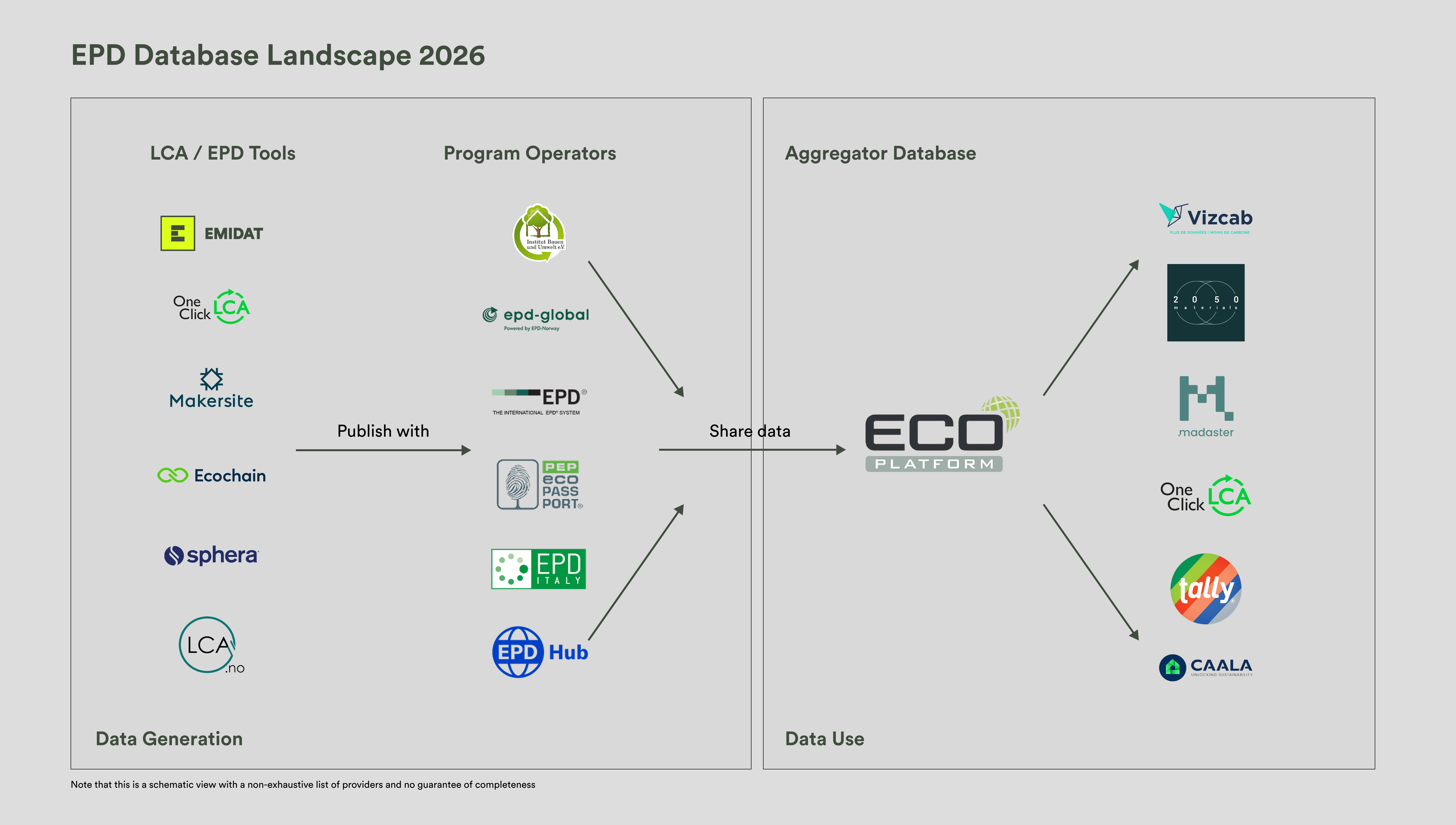
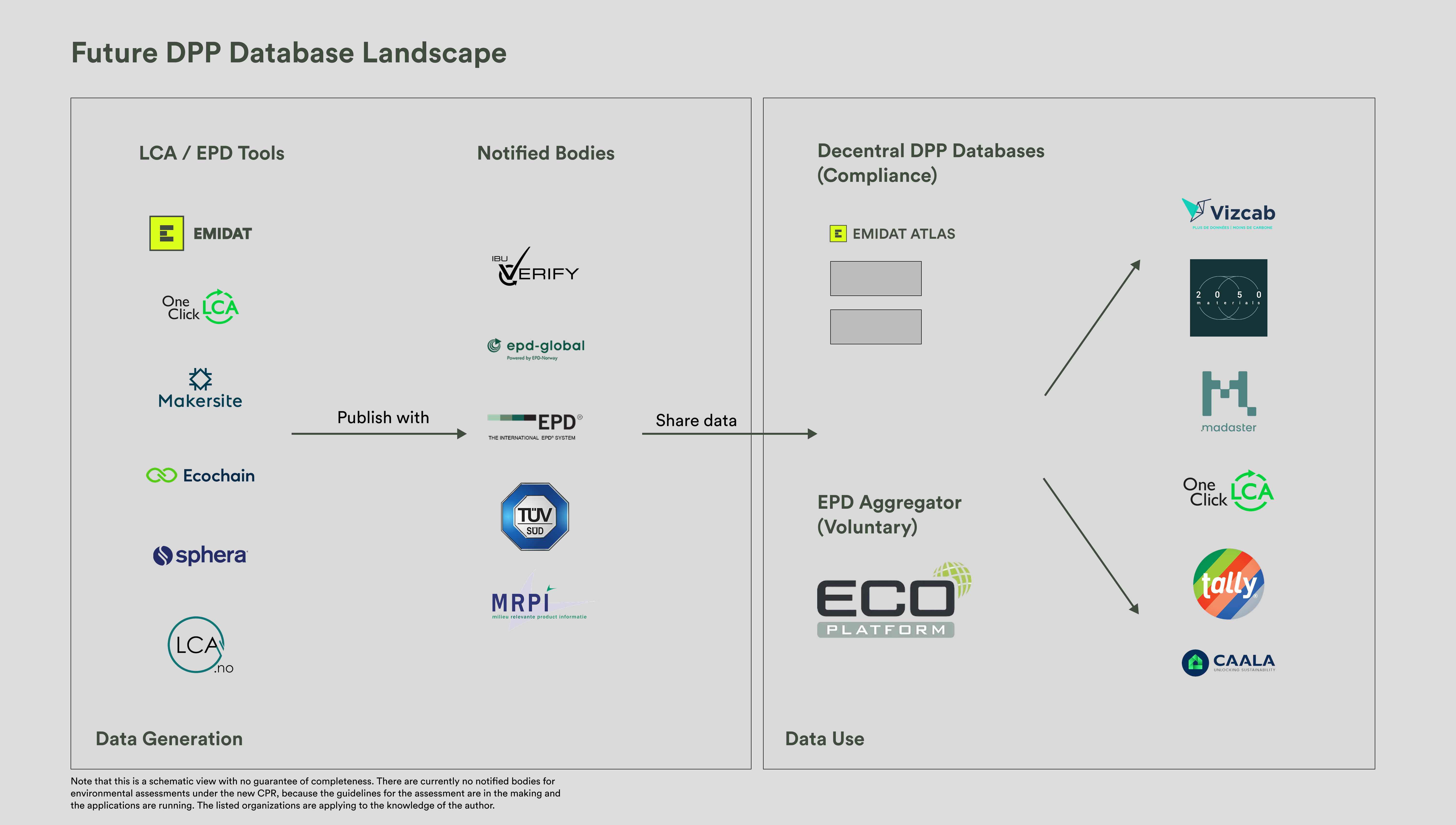
We see two types of solutions addressing these problems to enable data use:
- Tech companies earning money on making the data usable
Focusing on the user side of the environmental product data, it is usually planning or procurement. In construction, there are several building-level LCA tools that are targeted to architects and project developers. They earn money to make the environmental data easy to use, they “consume” data from these databases. These solutions enable developers to demand higher prices for their buildings (e.g. through certifications like LEED, BREEAM, DGNB), receive more beneficial conditions in their bank loans (e.g. with QNG) or comply with national law (e.g. staying within CO2 thresholds in the Netherlands or Denmark). They are economically dependent on providing value to the end user.
- National databases with additional quality requirements
To ensure data quality, there are rigid national databases like the Ökobaudat (Germany) and the NMD (Netherlands), who only allow specific Program Operators to publish in them, often with additional requirements and quality checks. This makes sense, because these databases usually tie the environmental impact of products to financial incentives, so tender processes, interest rates of bank loans and large investment decisions depend on their accuracy. Their job is to make the environmental impact assessment of products comparable.
However, there is also criticism that this is against the idea of an open Single Market and at Emidat, we see this problem in practice everyday: A German producer selling to several European markets needs to redo their environmental data for France (publishing in INIES), the Netherlands (publishing in NMD) and the rest of Europe (publishing through EPD Global or EPD International to Eco-Platform). They pay three times for three different consultants and three different publishers to calculate the very same product, gathering documents but not relevant information to reduce. Yet they are forced to do so, because they cannot otherwise sell their product in the local markets.
This is where the Construction Products Regulation (CPR) aims to harmonise standards across Europe. It aims to simplify and unify the environmental accounting that is already happening nationally today and to aggregate all product reporting in the digital product passport (DPP). If done well, this should actually reduce, not increase paperwork for manufacturers!
It’s the Bloomberg moment in environmental accounting.