What the EU's DPP Methodology Means for Manufacturers (JRC 2026 Report Summary)
April 10, 2026
·
4 min
Last updated:
April 10, 2026
Key Summary
The EU's Digital Product Passport (DPP) initiative, set to be implemented by 2026, aims to enhance product sustainability and transparency across various sectors.
The Joint Research Centre (JRC) is developing the methodology, focusing on critical environmental and social impact categories. For manufacturers, this means a significant shift towards greater data collection, disclosure, and compliance.
The DPP will require detailed information on a product's lifecycle, including sourcing, production, repairability, and end-of-life management. This will impact supply chain management, product design, and marketing strategies. Early preparation and integration of DPP requirements into existing systems will be crucial for seamless compliance and competitive advantage.
Preparatory study teams will use this document to determine what information your DPP must include, at what level of detail, and who gets access to it.
Here is what matters for manufacturers.
Nine data requirements
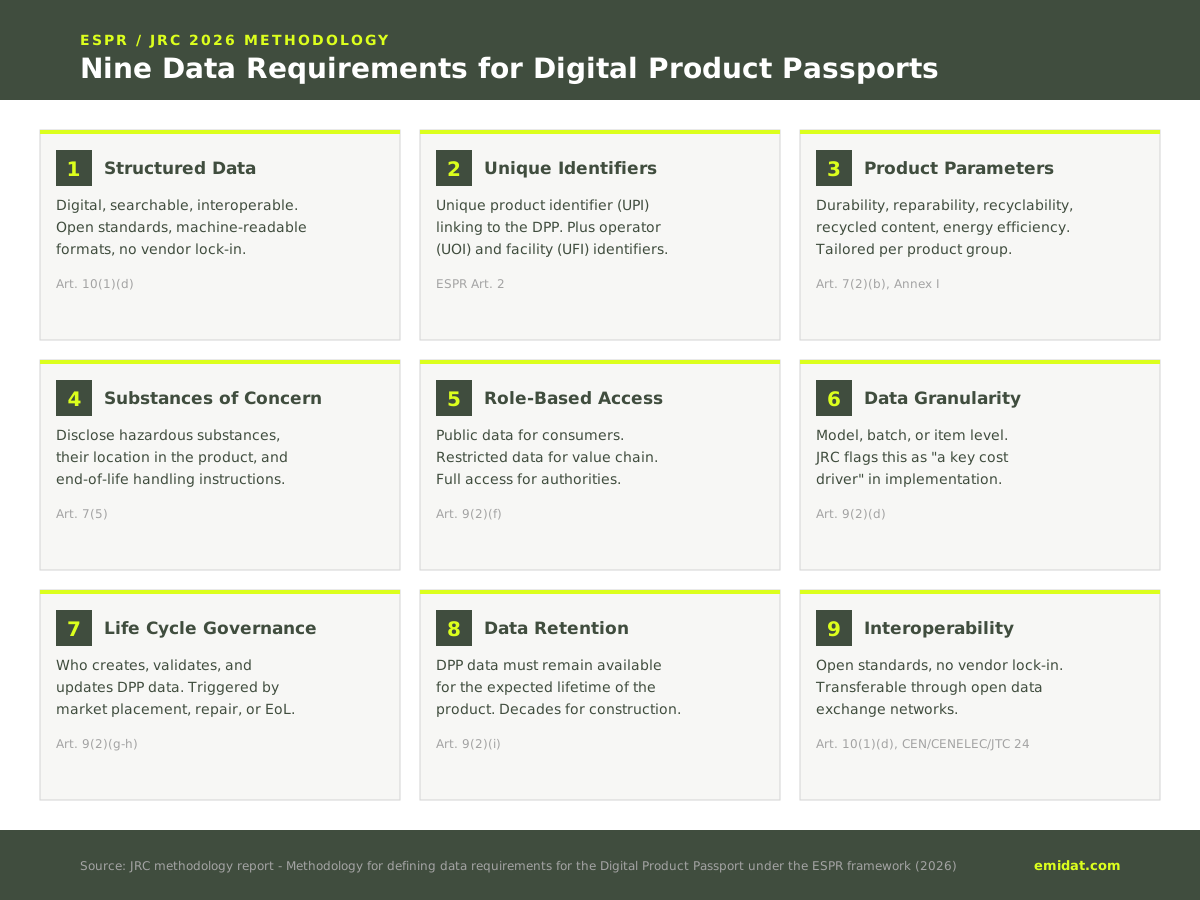
The JRC methodology translates the ESPR into nine categories:
1. Structured, machine-readable data. DPP data must be digital, searchable, and interoperable. The ESPR requires "open standards" and "machine-readable formats" with no vendor lock-in (Art. 10(1)(d)).
2. Unique product identifiers. Every product needs a unique product identifier (UPI) that links to its DPP. The ESPR also introduces unique operator identifiers (UOI) for economic operators and unique facility identifiers (UFI) for manufacturing sites.
3. Product-specific parameters. Environmental performance data tailored to your product group: durability, reparability, recyclability, recycled content, energy efficiency. Defined per product group through delegated acts.
4. Substances of concern. Manufacturers must disclose hazardous substances present in the product, their location, and handling instructions for end-of-life treatment.
5. Role-based access control. Different actors see different data. Public information for consumers. Restricted data for value chain operators: repairers, recyclers, remanufacturers. Full access for market surveillance authorities (Art. 9(2)(f)).
6. Data granularity. DPPs can be required at model level, batch level, or individual item level. The JRC methodology flags this as "a key cost driver." Requirements that diverge from existing industry traceability practices increase implementation costs significantly.
7. Life cycle data governance. Rules for who creates, validates, and updates DPP data. Delegated acts can define update triggers: placing on market, repair, component replacement, change of ownership, end-of-life treatment.
8. Data retention. DPP information must remain available for the expected lifetime of the product. For construction products, that can mean decades.
9. Interoperability. Data must use open standards and be transferable through open data exchange networks. Vocabularies must align with standards being developed by CEN/CENELEC/JTC 24.
Nine Data Requirements for DPPs (ESPR / JRC 2026 Methodology)
Who is responsible
The ESPR places primary compliance responsibility on the manufacturer; or the importer, if the manufacturer is outside the EU.
Manufacturers ensure compliance with all DPP obligations in the relevant delegated act
Importers assume manufacturer-equivalent obligations when the manufacturer is outside the EU
Distributors verify that required information and DPP access are present before making a product available
Authorised representatives perform specific tasks within the limits of a written mandate
DPP data must be "accurate, complete and up to date" (Art. 9(1)). This is an ongoing obligation.
Timelines by product group
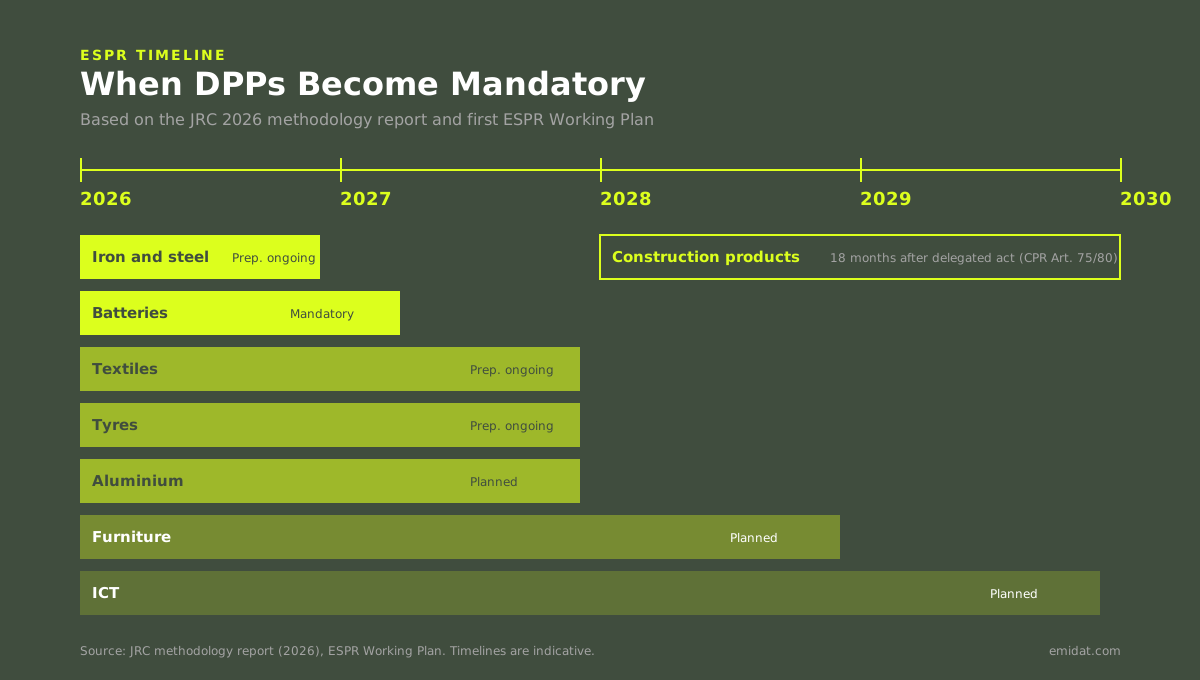
DPPs are being introduced progressively:
ESPR Timeline 2026
Sector-specific legislation adds DPP obligations independently. The Construction Products Regulation establishes its own DPP system under Articles 75 and 80. The Packaging and Packaging Waste Regulation, Toy Safety Regulation, Detergents and Surfactants Regulation, and European Critical Raw Materials Act all include DPP-aligned requirements.
The scope will grow. The ESPR Working Plan is updated regularly to bring additional product groups in.
What to take away
This is a data architecture requirement. The nine categories describe a system: structured data, access control, governance, retention, interoperability. Meeting them means rethinking how product data is created, stored, and shared.
Granularity is the cost lever. The report says it directly: moving from model-level to item-level granularity where it is not already practiced "can significantly increase implementation complexity and compliance costs." Understanding your product group's likely requirement early helps you plan.
Deadlines are product-group-specific. Each product group gets its own delegated act with its own timeline. Once adopted, the clock starts. Manufacturers who assess their readiness before their delegated act is finalized will have more time and more options.
Emidat is the first platform to produce Digital Product Passports alongside verified Environmental Product Declarations (EPDs); with structured, machine-readable data, role-based access, granularity controls, and life cycle governance built in.
Request a DPP demo to see what a compliant Digital Product Passport looks like for your products.